The Cherry Orchard is undoubtedly a brilliant play, one that tells the human story with stunning precision and nuance. The way comedy rides atop the undercurrents of sadness and despair is perhaps the most perfect illustration of how life actually is. As one person’s universe falls apart, others stand around laughing, failing to notice the tragedy unfolding in front of their eyes. And nobody is the hero or the villain. Everyone has good and bad traits, good and bad behaviours, and reactions firmly rooted in the experiences that have shaped them.
I fancy myself a bit of a Lopakhin, forever watching a multitude of slow-motion car crashes unfold before me with a mixture of frustration and disbelief. I spend much of my time yelling warnings into the void. Nobody listens. Then I find myself standing over the wreckage, knowing I cannot say, “I told you so”, yet somehow feeling responsible for not having been able to prevent it.
This production, however, does not quite do the play justice. And frustratingly, I cannot quite put my finger on why. I just never found myself invested in any of the characters or particularly interested in what was happening to them. By early in the second half, I was starting to get bored.
Admittedly, I did see it during previews. Performances had only begun on 3 October, and with press night not until 13 October 2026, I was seeing it relatively early in its run. Maybe it simply needs a few more performances to gel.
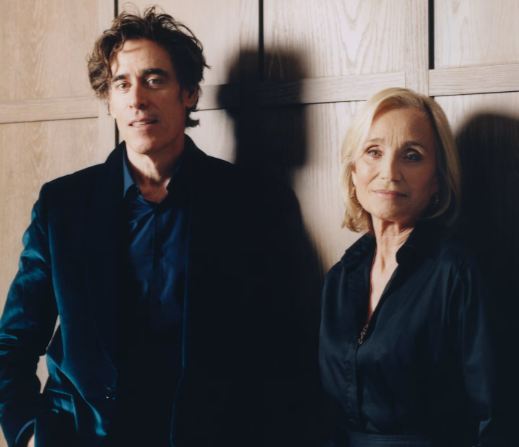
Or maybe Kristin Scott Thomas’s Ranevskaya is not quite magnetic enough to justify the adoration with which she is surrounded, or grief-stricken enough to elicit empathy. Or maybe Lopakhin is not dressed in clothes fine enough to emphasise just how desperately he wants to fit in. Perhaps we need to sense more strongly that, for all his money, he still feels himself an outsider. I honestly do not know.
Nor did the acting offer much in the way of interpretation. Do Lopakhin and Varya remain unengaged because he is secretly hoping to marry her mother? Because he genuinely feels she is somehow above his station? Or because he simply does not fancy her? Or is the irony that Lopakhin, so frustrated by the family’s inability to act, proves equally incapable of acting where Varya is concerned? The script presents a blank canvas and leaves these questions to the actors. Ambiguity, though, is not the same thing as blankness. Here, however, the acting itself remained the blank canvas.
As often happens when the acting does not quite gel and the chemistry is lacking, my mind began to drift and lose focus. Instead, I found myself thinking about the parallels between the play and the current political scene. Trofimov reminded me of Zack Polanski, not believing in money and generally not feeling the need to work, content for others to sustain his existence. The family are rather like the Labour Party. The money is all long gone, but they carry on spending on dinners and champagne, hoping that a promissory note from a wealthy relative, or perhaps the IMF, will arrive in time to save the day. The big bad bank naturally becomes the bond markets, and so on.
I am not sure that was what Chekhov had in mind, but I suppose it is a testament to just how enduring the play is.
Leave a Reply