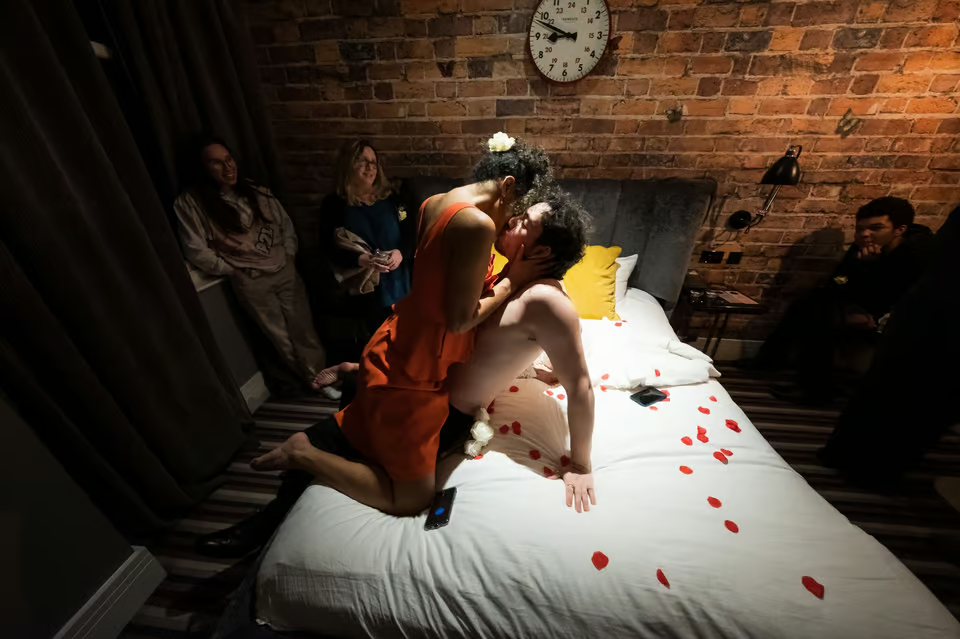
The plot is little more than a combination of wedding clichés: a series of interconnecting vignettes set minutes before a wedding is supposed to take place, complete with wedding jitters, dancing on beds, fights, and drinks. Despite the lack of a substantial storyline, I really do not regret going. It was my first “scene‑specific” performance, and the experience was very different from sitting still and observing events unfold on a fixed stage.
The audience is ushered into six different hotel rooms in groups of around twelve, watching the same period unfold from different perspectives six times. The action is rewound by the hotel maid moving through a corridor‑cleaning routine in reverse whilst Sea of Love plays backwards on her headphones.
Although each room has its own main characters, the overlapping stories slowly come together like pieces of a puzzle, forming one coherent picture of family and wedding drama. Over time, even the cacophony of corridor sounds becomes intelligible. Yet each group experiences it differently, as the details emerge in a different sequence. It is hard not to wonder what the “best” order might be, or whether every group witnesses each scene performed in an identical way. This adds to the sense that it is a unique experience, with an alchemy specific not just to the showing, but to each group of voyeurs.
It is logistically impressive. However, it does mean that certain scenes feel a little stretched out or empty, as time needs to be filled to sync with the other rooms. Oddly, I used those moments to observe my fellow audience members—wondering how they were interpreting events and imagining what their own backstories might be. I also found myself focusing on the hotel rooms, thinking I would be devastated to have spent £350 on rooms this bland and soulless.
That said, the actors use these hotel rooms incredibly authentically—moving in and out of bathrooms, cupboards, and adjoining rooms. The detailed props have been meticulously planned, so depending on where in the room you are standing, you will have a different experience from others. Clothes are sprawled everywhere: you might notice a pair of boxers hanging on the TV or a pile of dirty socks. You might be able to read the messages on a phone but not the scribbled note beside it. If your view is obstructed, you will miss a lot. Some details might be unavailable to all, simply because other participants happen to be in the way. Using larger hotel rooms or having fewer people in each group could help. The Malmaison rooms are especially cramped—though perhaps this claustrophobia is intentional, trapping us and the characters in something increasingly uncomfortable.
When the performance ends, it is hard not to wonder whether the couple will actually go through with the wedding. You realise you have just seen so many different facets of marriage: the dreariness of monogamy from Abigail’s perspective; the pain of betrayal from the divorced Helen; the lack of respite for Eileen; and the societal expectations embodied by Nick. The rooms themselves seem to represent the stages of marriage—the lust, the love, the search for human connection, the partnership needed to raise a child, and the bond that carries through to caring for someone when they can no longer care for themselves.
So perhaps it ends up being a little more than just tropes after all.