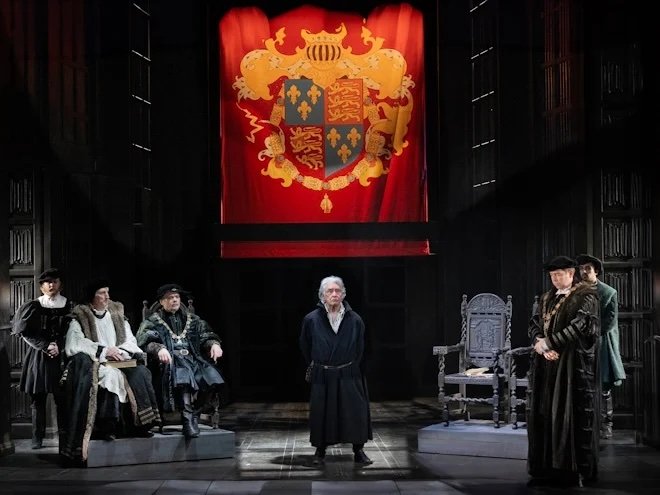
Robert Bolt wrote an early form of this play for BBC Radio over 70 years ago, 55 years before Hilary Mantel wrote Wolf Hall.
It is a very traditional, historical play. The stage is beautiful, as are the costumes, but the somewhat dragging script and lack of engaging on-stage interactions between the characters is a stark reminder of the radio origin. I was hoping for more witty discourse and emotion.
Nonetheless, it is a compelling story of a period in English history that fascinates the entire world. However, what I found disappointing was the missed opportunity to make the play more current, even if just through a couple of well-placed, subtle amendments.
The central theme, after all, is the steadfast politician who puts what he believes to be right ahead of his own career, his wealth, and even his own life. A statesman who does not falter until the very end. In today’s Britain, when our leaders seem to change allegiances, policies, and views at the drop of a hat, and where personal gain and hypocrisy seem to be the one constant among them, the story of More carries particular poignancy. It does not matter whether we agree with his views or positions, but the fact that he will not change his stance for expediency must be admired.
A brighter light could also have been shone on one other theme, one brought forth not by More but his nemesis, Cromwell. Cromwell introduces the notion that there are different types of silence. With the ongoing rape gang scandal, the concept of silence as complicity is a devastatingly painful one.