(Spoiler alert – this is a new play, and I do write about what happens in it)
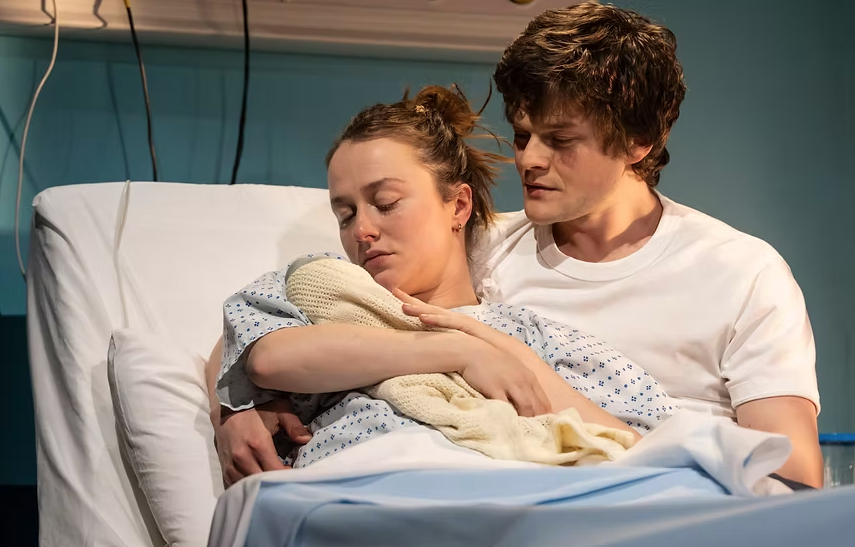
This is a 95‑minute play, performed without an interval, high in emotion and very well acted. It follows a young, pregnant couple from their mid‑pregnancy scan, during which they experience the joy of feeling the baby move for one of the first times.
Their happiness, however, is short‑lived. With an extreme case of spina bifida, the baby not only has a 50/50 chance of survival, but—if carried to term—its quality of life is likely to be very low. By the end of the second scene, they reach the decision to proceed with an abortion. The ensuing three scenes depict the aftermath.
With each scene, the stage gets smaller and smaller, relentlessly closing in on the couple. And with each scene the emotional charge gets higher and higher – mounting grief and guilt as their relationship begins to collapse in on itself. Right until the very end, when the stage expands again and tension and pain are replaced by serenity and hope, albeit with a clear indication that the sense of loss will never entirely leave them. Importantly, there is no preaching here—we are not told what is right or wrong. Instead, we are shown how certain choices mean choosing the lesser of two evils. Each scene is separated by a moment of darkness, acting as a kind of palate cleanser and offering space for personal reflection.
The play is very focused, with no side plots or supporting characters. For the most part, it is a two‑hander, with the main characters exceptionally well drawn—a testament to why opposites attract and how the compensating nature of differences can help partners navigate the hardest of times. She is fiery; he is calm. She comes from a broken home; his religious parents remain together. She is all emotion; he may quote poetry, but he is the more rational. They are a couple full of contrariness—hurling abuses, laughing together, and caring deeply for one another. Their dialogue is convincing, although at times the responses feel a touch too intellectual to have been spoken in the heat of the moment.
Some scenes are also slightly overwritten and could benefit from trimming. And even though one should not try to order or rank grief, the desperation portrayed sometimes feels almost excessive – there is the loss of a child and then there is an abortion at 20 weeks. Perhaps had the post‑mortem revealed that the case of spina bifida was, in fact, very mild, the extreme guilt would have felt more justified. I also found myself wondering whether the modern default of “bereavement bonding” is truly helpful in all circumstances. I know what the research says, but maybe sometimes it is better to allow ourselves to forget the worst moments.