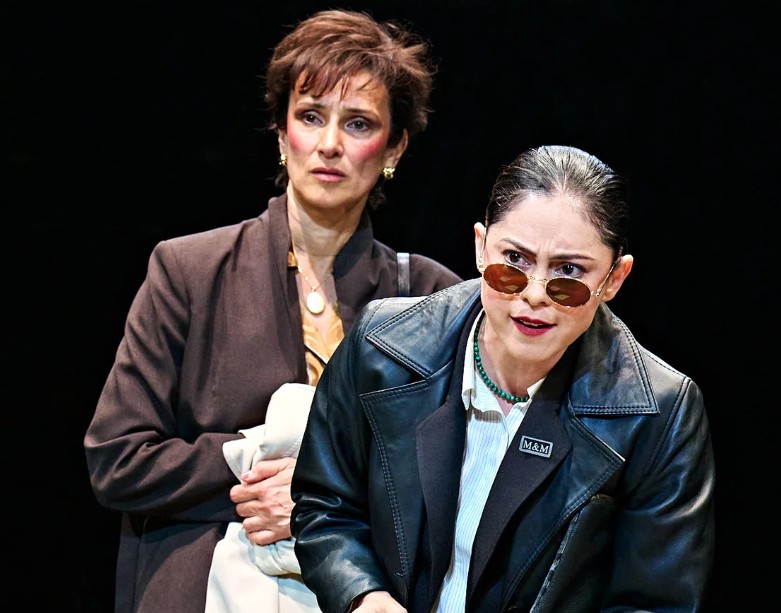
Despite being an avid theatre-goer, I hadn’t really given much thought to the calibre of female roles until recently, when I attended an event with Harriet Walter. She was promoting She Speaks: What Shakespeare’s Women Might Have Said, in which she gives voice to a range of women in Shakespeare’s plays. As part of her talk, she shared statistics on how little, if any, airtime these characters actually get and how frustrating that can be for an actress. She also spoke about Donmar Warehouse all-female Shakespeare trilogy staged as a play-within-a-play performed by inmates in a women’s prison.
Not long after, I attended an event at the Barbican, where Benedict Cumberbatch, Indira Varma, Juliet Stevenson, Toby Jones and Lennie James interviewed each other, reflecting on life, acting, the arts, and social change. One thing they all seemed to share was a desire to play King Lear. This included Indira Varma, who made similar comments to Harriet Walter and mentioned her current role as Shelley “The Machine” Levene in Glengarry Glen Ross.
It was because of her that we bought tickets. When I first saw the advertising—which focused heavily on the all-female cast—I assumed it would be a disaster and decided to skip it. But I couldn’t skip her once the cast was announced. However, my concerns remained. Having fairly recently rewatched the film, with its aggressive machismo, “alpha dog” posturing, casual misogyny and relentless swearing, I struggled to see what would be gained by swapping men for women. I’m not suggesting women are all sugar and spice, but the way we compete and fight is different—and without a broader rethink, it was hard to see how this would land.
And sadly, I should have trusted my gut, because in the end I spent £300 to see women cosplaying men. They appeared in make-up, heels, long hair, and slightly frumpy suits (trouser or skirt), occasionally paired with the odd fur coat. They weren’t transformed into men in the way, say, Stephen Fry becomes Lady Bracknell, yet they were still swearing, swaggering, manspreading and shouting—just in higher-pitched voices. It became unintentionally comic. Rosa Salazar (whom I remember being very good in High Noon) was not Roma, but a petite figure constantly flicking her ponytail. Varma was not Levene, but a woman moving in a strangely affected way that kept pulling my attention from the text. Niky Wardley, as Moss, was probably the only one who channelled an energy that felt remotely aligned with the role.
Back home, I ended up in a heated debate with my son, who did enjoy it. He found the acting compelling and left feeling entertained. However, even he admitted that an all-male cast would have been better. Ultimately it felt like an indulgence on the part of the actresses, a sort of vanity project that didn’t really put the audience first. I was reminded, uncomfortably, of An Oak Tree, in that same sense of an ego-led exercise with little care for the experience of those footing the bill.